Protecting Young Ears on World Hearing Day
For 14 years, I worked as a teacher. I worked in schools in the UK, China, Thailand, and Spain, so I experienced a wide range of settings. I specialised in Early Years education, supporting young children to learn the key skills that form the foundation of their school life.
Although supporting curriculum objectives and academic progress was an important part of my role, just as important to me was making sure the children in my class felt safe, happy, and confident to express themselves and their needs, manage difficult emotions, build friendships, and develop a good understanding of health, hygiene, and safety. My roles as Personal, Social, Health and Citizenship Education (PSHCE) Coordinator and Coordinator of Pastoral Care reflected this. In writing this blog, I can see clear parallels with the work I now do with my coaching clients, particularly around confidence building.
When My Hearing Changed
I normally write about ears these days. My professional life changed direction when I lost the hearing in my left ear nine years ago due to sudden hearing loss. I took many months off work. Along with my hearing loss, I also developed noise sensitivity and lost the ability to tell where sounds were coming from, something we rely on having two working ears for. With my hearing loss also came fatigue, tinnitus, and balance problems.
Suddenly, the Early Years classroom, which once felt so safe, became a space filled with triggers. The busy visual environment, constant noise, and movement of children made me feel dizzy and vulnerable. My single-sided deafness meant I couldn’t identify which pupil sitting on the mat in front of me was asking me a question. When a child called me from across the room, I often didn’t hear them over the background noise or didn’t know which way to turn. I couldn’t gauge whether the classroom noise level was “too loud” or acceptable. Everything sounded like a muddle of loudness.
Adapting Together
The children in my class were remarkably adaptable. They learned to get my attention before speaking to me, often by tapping me insistently. They asked with care and interest about my “poorly” ear. They tried to use their classroom voices and speak one at a time when they remembered. They were only four years old, after all, and naturally enthusiastic with competing voices!
I adapted too. I created small flashcards with visual reminders that I would hold up when teaching, with images to help remind my pupils that hearing wasn't always easy for me and that I needed accommodations. For example, I had a picture of a child with their hand raised that I would hold up when the children’s voices began to overlap. I would ask my teaching assistant to help me judge when noise levels were rising and when it was time to prompt the class to lower their voices.
Seeing the Classroom Differently
When I returned to the classroom after my hearing loss, I realised just how loud a school environment can be. I asked to be excused from morning assemblies, as I struggled with the loud music being played as the pupils entered the hall. At lunchtime, I tried to spend as little time as possible in the main hall, which doubled as an assembly room, lunch hall, and space for physical education. I avoided the noisy lunch hall and sat in a quiet classroom to eat my lunch. I used to love teaching PE, but now I could no longer stand it. The echoey space trapped every sound, bouncing it around the room, building with the noise of happy, active children. Granted, I was oversensitive to noise at the time, but it opened my eyes (and ears!) to how much noise children are exposed to daily in an environment I’d spent years trying to make safe and healthy.
We live in a society that often equates loud with fun. School celebrations like festivals, performances, and parties frequently involve loud music. I remember the children who would cover their ears when walking into assembly to booming music… Loud is not always fun.
A Gap in My Own Awareness
For most of my teaching life, I lacked even a basic understanding of hearing health, despite having taught children with various hearing needs. Not once in those 14 years did I consider that the classroom environment might be affecting my pupils’ ears. When I turned up the volume of a YouTube video for the class to dance to, rehearsed school performances to loud music, celebrated Friday afternoons with music, marked birthdays with enthusiastic singing, or played the tidy-up song loud enough to cut through the classroom noise, there were countless moments when I may have unknowingly contributed to unsafe noise levels.
And that brings me to the point of this article.
From Communities to Classrooms
World Hearing Day, held each year on 3 March, is led by the World Health Organization to raise awareness of hearing loss and promote ear and hearing care. Each year highlights a specific theme to guide global awareness activities.
In 2026, the theme is “From communities to classrooms: hearing care for all children,” with a focus on preventing avoidable childhood hearing loss.
With that in mind, here are seven easy-to-apply suggestions based on my experience as both a hearing health advocate and former Early Years teacher:
Seven Simple, Practical Steps
Teach about hearing health
It sounds obvious. But with heavy curriculum demands, even an hour focused on the topic of ears can feel like a luxury. Yet this is children’s health we are talking about. What could be more important?
In many of the schools I taught in, the school year would be sprinkled with various themed weeks and days, breaking up the curriculum. Anti-Bullying Week, World Book Day, Earth Day, and Health Week, to name a few, before even considering the religious or cultural celebrations. Health Week, one of the many weeks I was often in charge of organising, in an Early Years classroom, involved teaching the importance of personal hygiene, such as brushing our teeth and washing our hands, healthy eating, exercise, and naming and managing feelings. Hearing health was never included in the weekly plan.
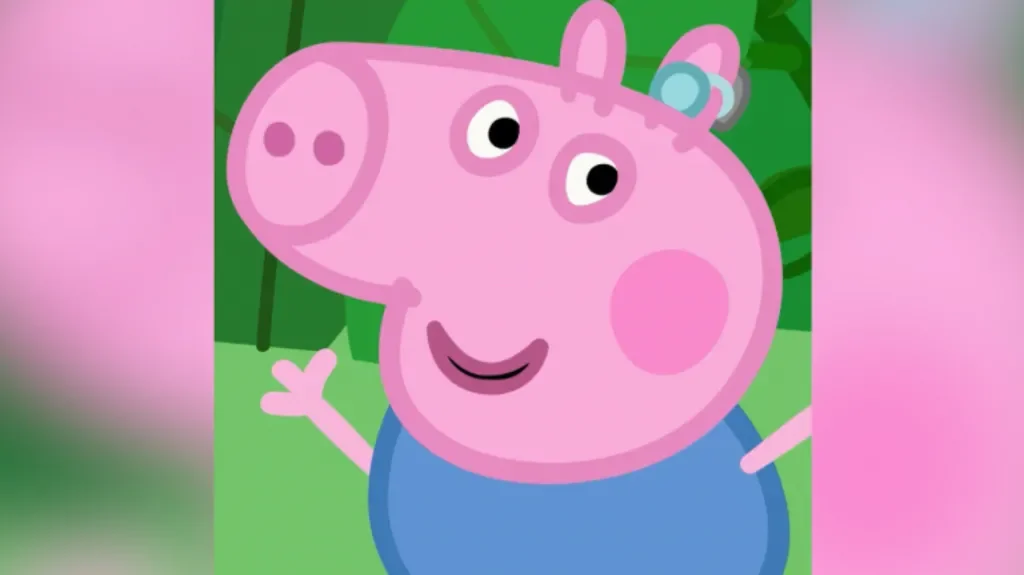
George Pig with his blue hearing aid in his left ear
Pupils loved these themed focus weeks, and it was often the creative, hands-on learning during them that stayed with pupils long afterwards. Throughout the year, they would remind each other (and me!) to wash my hands before lunch, and talk about how it’s healthy to eat vegetables and drink water. Why not encourage them to protect their ears too?
Invite children to talk about hearing. Do sounds ever feel too loud? Too quiet? Uncomfortable? Do they know anyone with hearing loss? Do they or someone they know use hearing technology? You may have pupils who would love to share their experiences. With young children, the recent storyline of Peppa Pig’s brother George getting a hearing aid could be a thoughtful and familiar way of introducing the topic.
2. Help children value what they hear
Teaching about hearing health could involve not only raising awareness of the damage noise can cause, but also encouraging the children in your class to value their hearing. Early phonics lessons would involve listening for sounds in the environment and identifying patterns and differences in these sounds. We would go outside the school on a listening walk, usually wearing big, paper ears attached to bands around our heads, to remind us to pay attention to the sounds around us, and to share what we could hear. These types of activities, being mindful of everyday sounds, do not just have to be saved for this one lesson in a 4-year-old's school life.
With students of all ages, take a moment in your classroom and ask your class, what can they hear? Focus on the sounds that are often in the background. The aircon, teachers in the corridor, the wind outside, quiet giggles from pupils carrying out the activity. Encourage mindful listening. And enjoy the rare few moments of calm.
3. Lead by example
As a teacher, be mindful when your own voice is getting louder to compete with the background noise of the classroom. The more you raise your voice, the more the children in your classroom will follow your example. Model the volume you want to hear.
Be mindful, too, of how loudly music is played in the classroom. It’s easy for the volume to creep up. If children need to raise their voices to be heard over it, it’s probably too loud.
4. Make noise visible
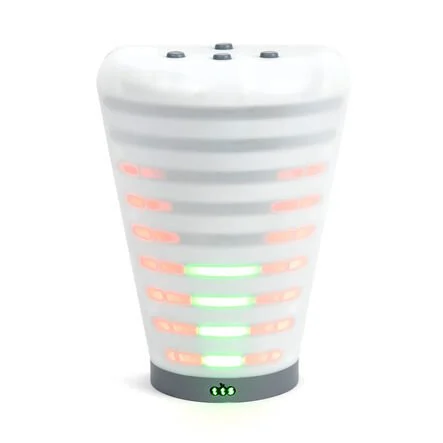
A white, cone-shaped classroom sound meter with horizontal LED light bands that glow green to red to show noise levels.
Manage classroom noise with a sound meter, which visually represents noise levels. Or use a traffic light noise level monitor that has the simple red, amber, green signals to indicate when classroom-level noise is too loud, which you can pre-set to comfortable noise preference levels. This could be situated at the front of the classroom, visible to everyone, and a reminder to think about the noise levels and our hearing.
A quick online search also led me to this free sound level meter to measure classroom volume levels and ensure students are staying within safe limits. You could use it on an interactive whiteboard so that it is visible to all children in your class. There are also sound or decibel meter apps you can download. A calm classroom is typically around 50–55 dB, busy group work can reach 65–70 dB, and levels above 75–80 dB can be tiring or stressful for children. Noise above 85 decibels can contribute to hearing damage over time.
WHO recommends that background noise ideally stay below 35 dB during teaching to support listening and learning.
Choose a child each day or week to be the sound monitor, responsible for keeping an eye on the noise levels and letting you know if it gets too loud. Young children often enjoy the responsibility of being given a role, and the other pupils are often more likely to respond to one of their peers tapping them on the back and asking them to lower their voices than the teacher asking over and over.
5. Get creative instead of shouting
We’ve all been there. The classroom noise gradually builds and builds. Your pupils stop responding to your reminders to lower their voices. You can’t take it any longer… and you raise your voice to regain control of the room. Next time this happens, instead of shouting, “Be quiet!”, have other methods to quieten a noisy classroom. Try consistent cues such as shaking a tambourine, clapping your hands to an immediately recognisable tune that signals to quieten. Many of the early years teachers I’ve worked with over the years have various tricks like this up their sleeves, but it requires being intentional in using them.
6. Include regular quiet breaks
Include short, quiet listening or calm-down moments into the routine, such as story time, quiet reading, mindful breathing, or silent tidy-up moments. Having small pauses like these gives children’s ears a rest from constant classroom noise and helps them learn that not every activity needs sound or music.
7. Consider the classroom environment
The way you set your classroom up can make a big difference in how sound travels. Soft furnishings such as carpets, rugs, cushions, curtains, and display boards help absorb sound and reduce echo. Hard surfaces like wooden floors, bare walls and windows reflect and amplify noise, meaning that it bounces around the room and builds.
You could also create smaller learning zones, such as reading corners, using bookcases or screens as sound barriers. Having a calmer acoustic environment means children don’t have to compete as much with background sound to be heard, reducing the need for raised voices and protecting their ears in a simple, passive way.
Final Thoughts
Hearing is such a wonderful sense which enables us to communicate, make connections and feel safe in our environment, yet it’s something many of us don’t really think about until it changes.
As educators, parents, and caregivers, we already teach children how to care for their teeth, their bodies, and their well-being. Hearing health deserves to be part of that conversation, too. The little people in our classrooms today are the adults of tomorrow, and helping protect their ears now is a simple step that can make a lifelong difference.
Resources:
Tips for teachers and schools on supporting your students who have hearing loss (originally published by TTS):
Coaching Support:
If you’re a teacher interested in hearing loss coaching, feel free to get in touch to arrange a free discovery call and explore how it could help.